Skip to content

From Old Money to Mega-Flagships: Hermès’ Next Chapter on Rodeo Drive

Hermès is quietly planning what could become the largest Hermes store in the world. The rumored $400M property deal marks a new era of luxury dominance.

From Old Money to Mega-Flagships: Hermès’ Next Chapter on Rodeo Drive
Photo by Jinsoo Choi / Unsplash
Published:

Author's Note

This article should’ve been short, just a few lines about Hermès buying another Rodeo Drive property. But I couldn’t help it. Hermès played such a formative role in my career that every time I write about the brand, it turns into something deeper: a reflection on leadership, excellence, and why true luxury never needs to rush.


Hermès of Paris has always been a remarkably authentic luxury brand — quietly confident long before the early-aughts era of paparazzi flashbulbs and reality TV. Before the days of Paris Hilton and Olsen Twins ruling the tabloids, and before Sex and the City or Gossip Girl made designer handbags part of everyday conversation, Hermès was considered by many to be, well… a luxury brand for old people. A little quiet. A little mysterious.
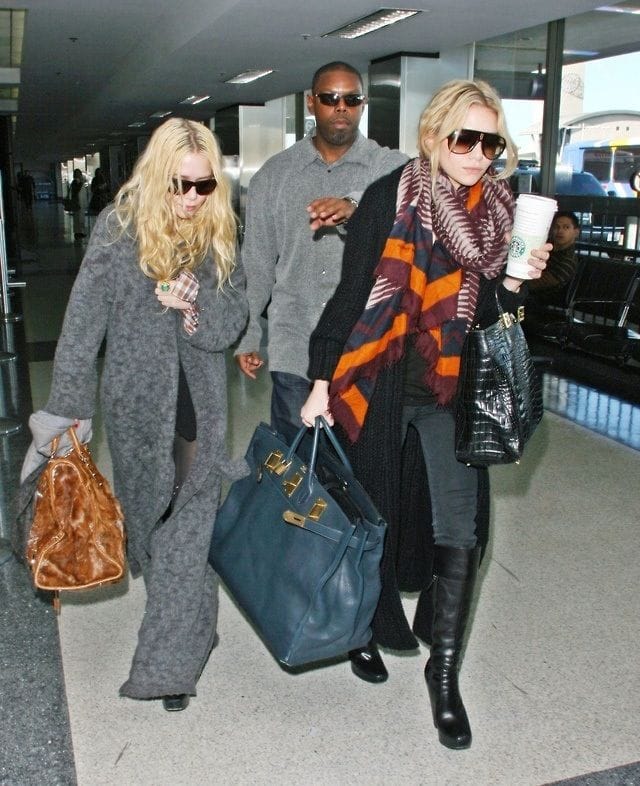
Mary-Kate and Ashley Olsen.

It wasn’t flashy; it didn’t need to be. The Maison’s world revolved around craftsmanship so rare and refinement so absolute that most people simply couldn’t imagine buying an Hermès $50,000 Jean-Michel Frank Club Chair and honestly, who could? Or a hand-sculpted Palisander wood horse from Indonesia priced at $8,000? The answer: the one percent of the one percent.

Hermès existed in its own lane — serene, timeless, and unbothered, long before luxury became a lifestyle hashtag.

The Rodeo Drive Legacy

That quiet confidence eventually found a home on Rodeo Drive, where Hermès opened its first North American boutique at 343 N. Rodeo Drive in Beverly Hills, a modest 1,800-square-foot storefront that marked the brand’s understated West Coast debut.
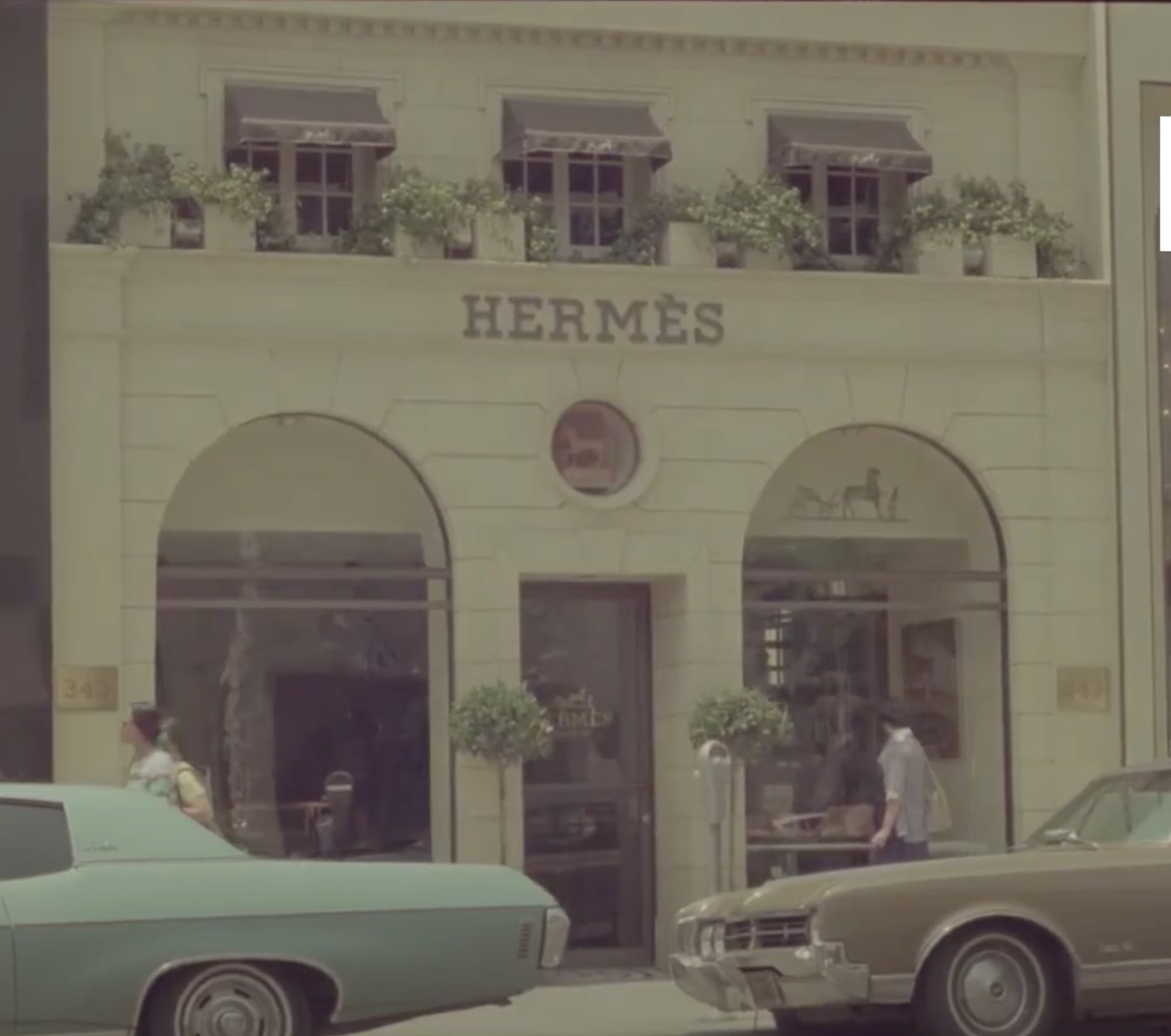
Hermes store on Rodeo Drive, 1977. Image: Kinolibrary

By 1997, Hermès relocated to its current address at 434 N. Rodeo Drive, and in 2011, the Maison made a defining move: purchasing the building for $75 million, its first U.S. real estate acquisition.

Following an extensive renovation, the boutique reopened in 2013 as a study in architectural elegance, intimate yet grand, and spanning 19,000 square feet across four levels.

That same year, I had the privilege of joining the Hermès Rodeo Drive opening team, an experience that would become foundational to my career in luxury retail. At the time, many insiders assumed Louis Vuitton and Chanel led Rodeo Drive in sales. Yet behind Hermès’ quiet facade, we were surpassing expectations and outperforming both houses across nearly every category.

It was proof that Hermès didn’t need to shout to lead; it simply needed to open its doors.

Hermes store on Rodeo Drive, 1997.

The 2010s: A Modern Luxury Renaissance

The 2010s marked a defining chapter for luxury retail. It was a period of resurgence after the 2008 financial crisis when global demand, led by Chinese consumers, reshaped the entire industry. Luxury went from cautious optimism to confident expansion, and Hermès stood at the center of that renaissance.

During this transformative time, I had the privilege of working under Colleen Clayton, then Managing Director of Hermès Rodeo Drive. Colleen’s leadership was nothing short of inspiring. She didn’t lead from a distance — she led with presence, empathy, and vision. She had that rare ability to make you want to do more, not because she asked you to, but because she made you believe you could.

Working alongside her was Sharon Pagdilao, then Director of Operations, who was Colleen’s left hand and my direct supervisor. She gave me my first opportunity at Hermès — a chance that shaped the trajectory of my career. Sharon balanced Colleen’s visionary leadership with operational rigor, and together they built one of the most formidable management teams in luxury retail.

Under their leadership, Rodeo Drive’s annual sales grew from roughly $30 million to $75 million, a 25% CAGR and an extraordinary achievement that reflected not just commercial success but cultural momentum.

Colleen and Sharon built a culture where precision and warmth coexisted. Where craftsmanship extended beyond product into the way we served clients, supported one another, and took pride in every detail.

Those years weren’t just about record-breaking sales. They were about learning what it meant to lead with integrity, grace, and conviction; values that continue to shape how I lead today.

(Current Hermes store. Image: 4kclips - Adobe Stock)

The Next Evolution of Hermès Rodeo Drive

The foundation built during that period of growth continues to define Hermès’ success today. The Rodeo Drive flagship now generates an estimated $200 million annually, a remarkable +165% increase in sales per square foot from approximately $3,945 to over $10,500 between 2016 and 2024, respectively. 

Unlike many luxury houses that chase novelty, Hermès refines rather than reinvents. Its recent renovation reflects this philosophy: discreet updates, rebalanced layouts, and a forthcoming transformation of the fourth floor into a private VIP salon, while operational functions and employee areas move offsite. The goal isn’t expansion for its own sake, it’s about elevating intimacy, creating a seamless client journey that mirrors the Maison’s quiet pursuit of perfection.

This past summer, the property at 338 N. Rodeo Drive — home to Tom Ford, Moncler, and Balenciaga, sold for a record $400 million, the second-largest property sale in Beverly Hills. The deal, brokered by Jay Luchs of Newmark, seller by ECA Capital Limited Ronan McNamee and with Michael Shabani of Crown Equity playing a role in the transaction.

338-346 N. Rodeo Drive Building, 2020. Image: Google Maps

While Hermès has yet to make a public statement, multiple credible sources confirm the brand as the buyer. The site spans 28,000 square feet, approximately 8,000 more than Hermès’ Madison Avenue flagship and early planning discussions suggest an eventual expansion to 40,000 square feet, positioning it to become the largest Hermès store in the world.

338-346 N. Rodeo.Dr., once home to Bally and Emporio Armani, 2016. Photo: Pierluigi Bonvicini Architect
338-346 N. Rodeo Drive Building, 2014.

This move is less about physical scale than strategic intent. By owning its real estate, Hermès ensures long-term control over its brand environment, a hallmark of its disciplined, generational approach to growth.

LRM is a 501 (c)(3) nonprofit 

Every contribution—large or small—fuels our mission. All donations are tax-deductible. Click below:

Support

The Future of the Mega-Flagship

Hermès’ quiet acquisition on Rodeo Drive represents more than expansion, it signals a broader shift in luxury retail strategy. Ownership has become the new expression of permanence. As luxury groups such as LVMH continue to acquire their own flagships, they’re not just buying property, they’re buying control over context.

Does LVMH Own Beverly Hills? A $1B Real Estate Power Play Says Yes.
LVMH’s real estate strategy in Beverly Hills transcends mere retail; it’s a calculated fight to own luxury corridors, redefining brand equity and challenging competitors to rethink their leasing habits.

Click to read my analysis on the LVMH take over.

In this new era, the flagship store is no longer just a place of commerce; it’s a stage for brand sovereignty. Every architectural decision, scent, texture, and beam of light becomes a controlled variable in the brand equation — shaping perception, reinforcing value, and preserving cultural capital for decades to come.

Rodeo Drive, once a showcase of leased storefronts, is quietly transforming into a corridor of privately held Maisons; a physical manifestation of luxury’s long game. What began as a race for visibility has evolved into a competition for permanence.


Questions or comments, write to Robert Gutierrez Jr. at hello@robgutierrezjr.com


Share Your Thoughts

As Hermès prepares to open what may become the largest Hermes store in the world, one question remains:

💡
Are we witnessing the golden age of the mega-flagship or simply the prelude to something even more experiential, more personal, and more rarefied?

Join the conversation and comment below.


Sources: Direct industry experience and expertise, Credible industry insiders, & Traded.co

Robert Gutierrez Jr.

Robert Gutierrez Jr.

Blending academic research + frontline experience to understand how organizations how shape experiences for employees & customers.

All articles

More in Hermes

See all

More from Robert Gutierrez Jr.

See all