
Author’s Note
I encountered the work of Frank Gehry in the most unexpected way—on a neighborhood run in Santa Monica. In 2010, shortly after moving into the area, I began noticing a distinct home wrapped in unconventional materials, angles, and textures. It felt experimental yet intentional, quietly announcing that creativity lived there long before the neighborhood became what it is today.
I later discovered it was Frank Gehry’s first self-designed residence. Even after he moved out years ago, the home remains—a physical reminder of how innovation often starts small, local, and personal. Over time, my admiration for Gehry’s work grew as I watched his influence shape Los Angeles's cultural and architectural identity. His impact feels deeply connected to this city, which I now call home.
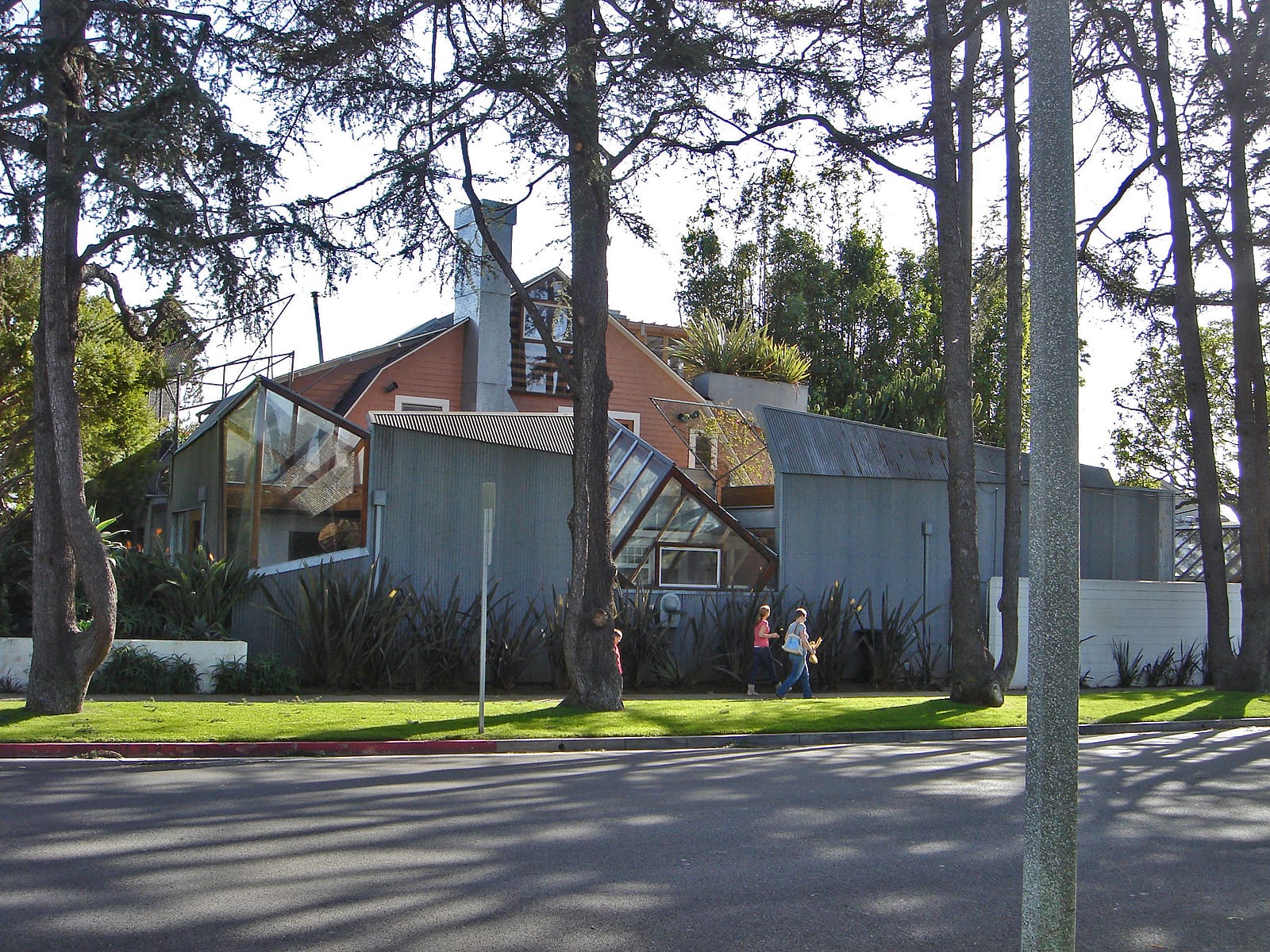
This article reflects on Gehry’s profound contributions to the luxury retail world—an area where architectural expression, brand identity, and cultural power converge.
Frank Gehry & Luxury Retail: An Architect Who Rewrote the Rules of Brand Experience
Luxury retail architecture has historically been about signaling. Gehry transformed it into storytelling. His structures invite curiosity, challenge norms, and create emotional resonance—qualities that increasingly define how luxury Maisons engage the modern client.
While Gehry’s global reputation was built through cultural institutions like the Guggenheim Bilbao and Walt Disney Concert Hall, his collaborations with luxury brands—particularly Louis Vuitton and LVMH—established a new blueprint for experiential flagship design.
The Longstanding Creative Dialogue: Gehry × Louis Vuitton
Louis Vuitton has long been a pioneer in using architecture as a pillar of brand identity. Its partnership with Gehry became one of the most culturally significant designer–Maison relationships of the last two decades.
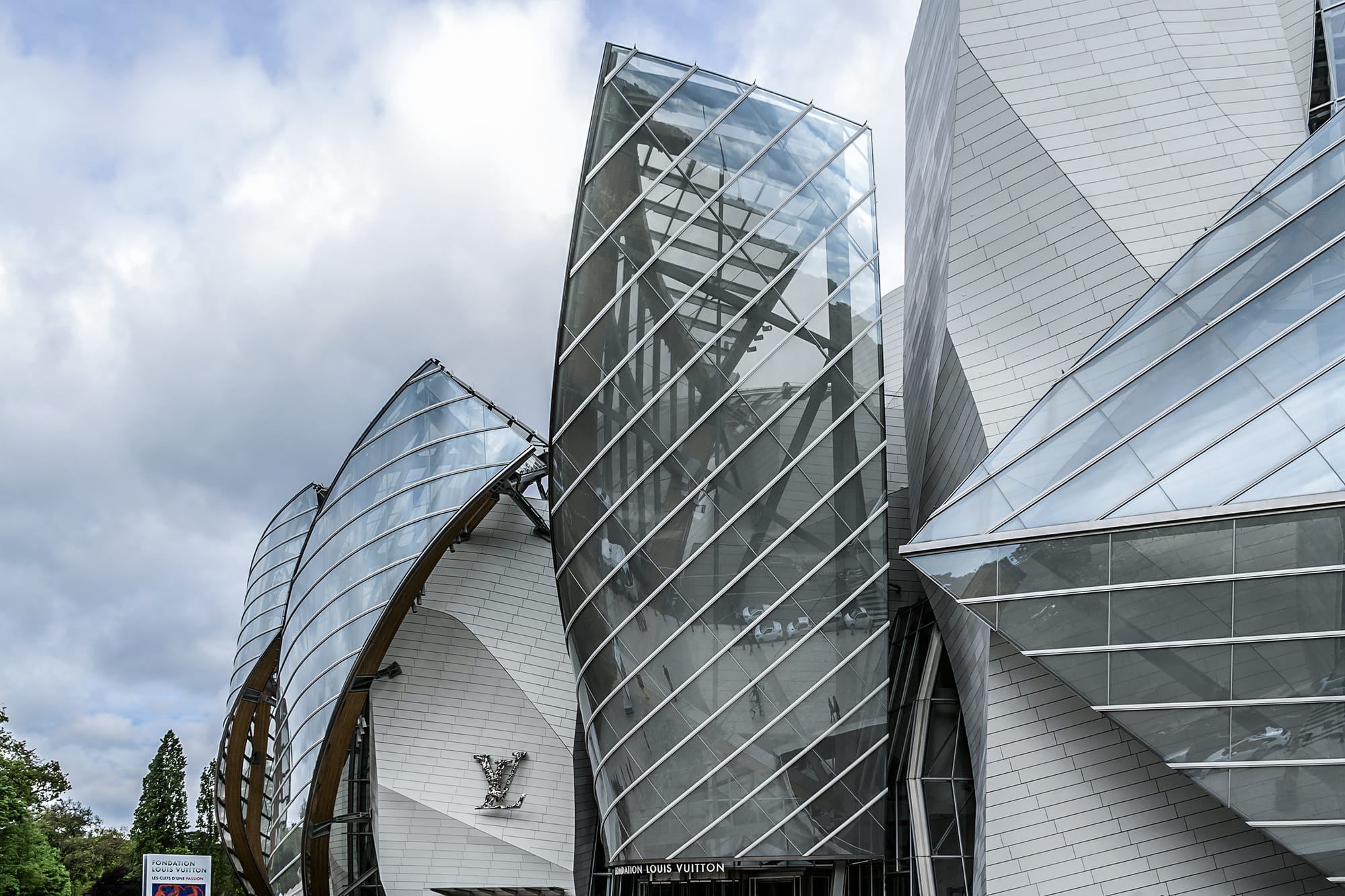
Fondation Louis Vuitton – Paris (2014)
Commissioned by Bernard Arnault, the Fondation Louis Vuitton is Gehry at his most ambitious and lyrical. Eleven glass “sails” curve and billow as if propelled by wind. It is not simply a museum; it is a declaration of LVMH’s identity as a global patron of the arts, a space where luxury intersects with cultural credibility.
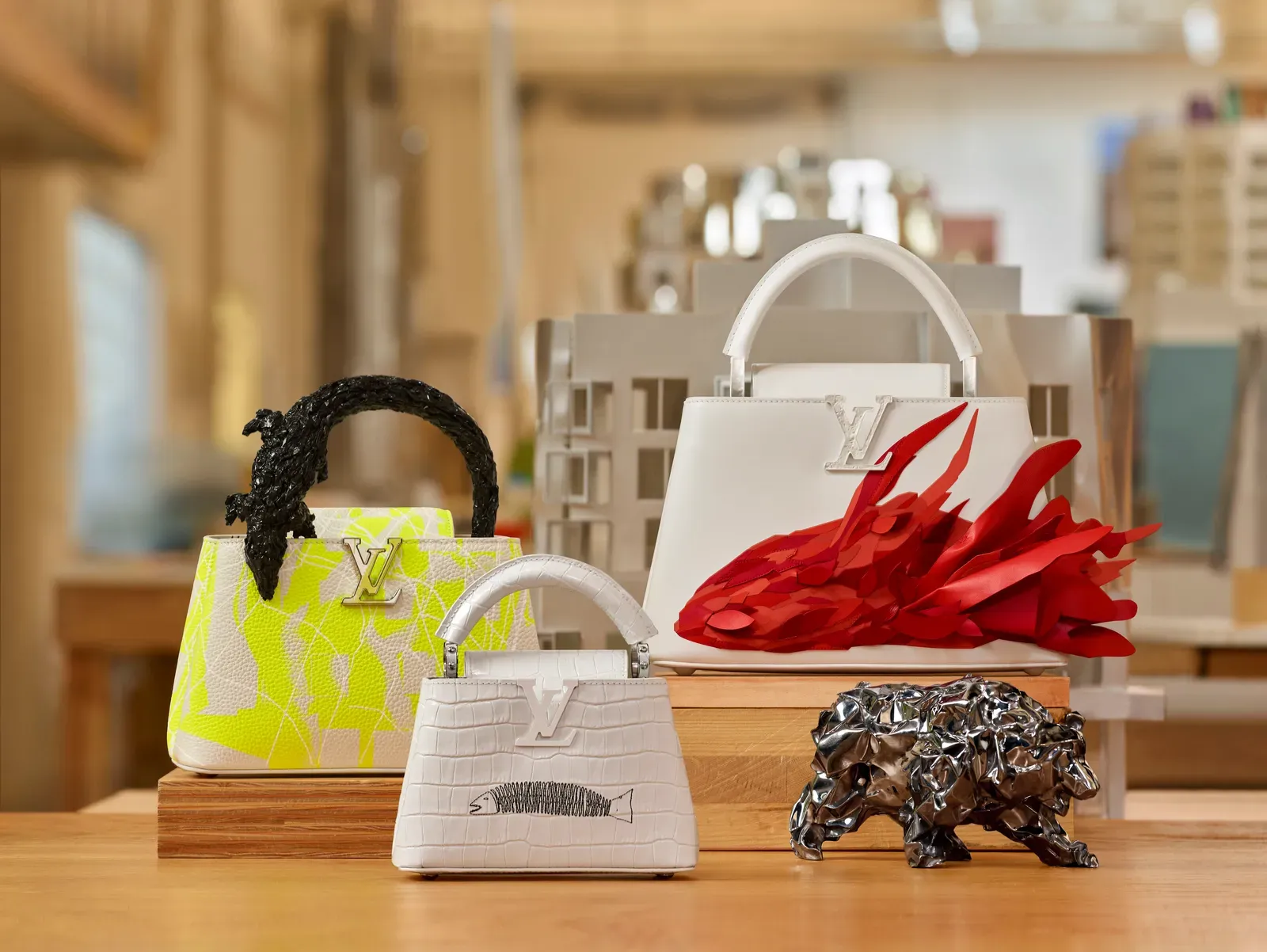
Louis Vuitton Design Collection
In 2021, Gehry designed glass-like resin petals for the perfume bottles of Les Extraits Collection. To celebrate LV’s 160th anniversary, Gehry was invited to reinterpret the iconic monogram. The result: sculptural handbags that treated leather like architectural material—folding, twisting, and layering in unexpected ways.
These designs resurfaced again in 2024/2025 at Art Basel Miami Beach, celebrating the continued resonance of Gehry’s artistic dialogue with Louis Vuitton.
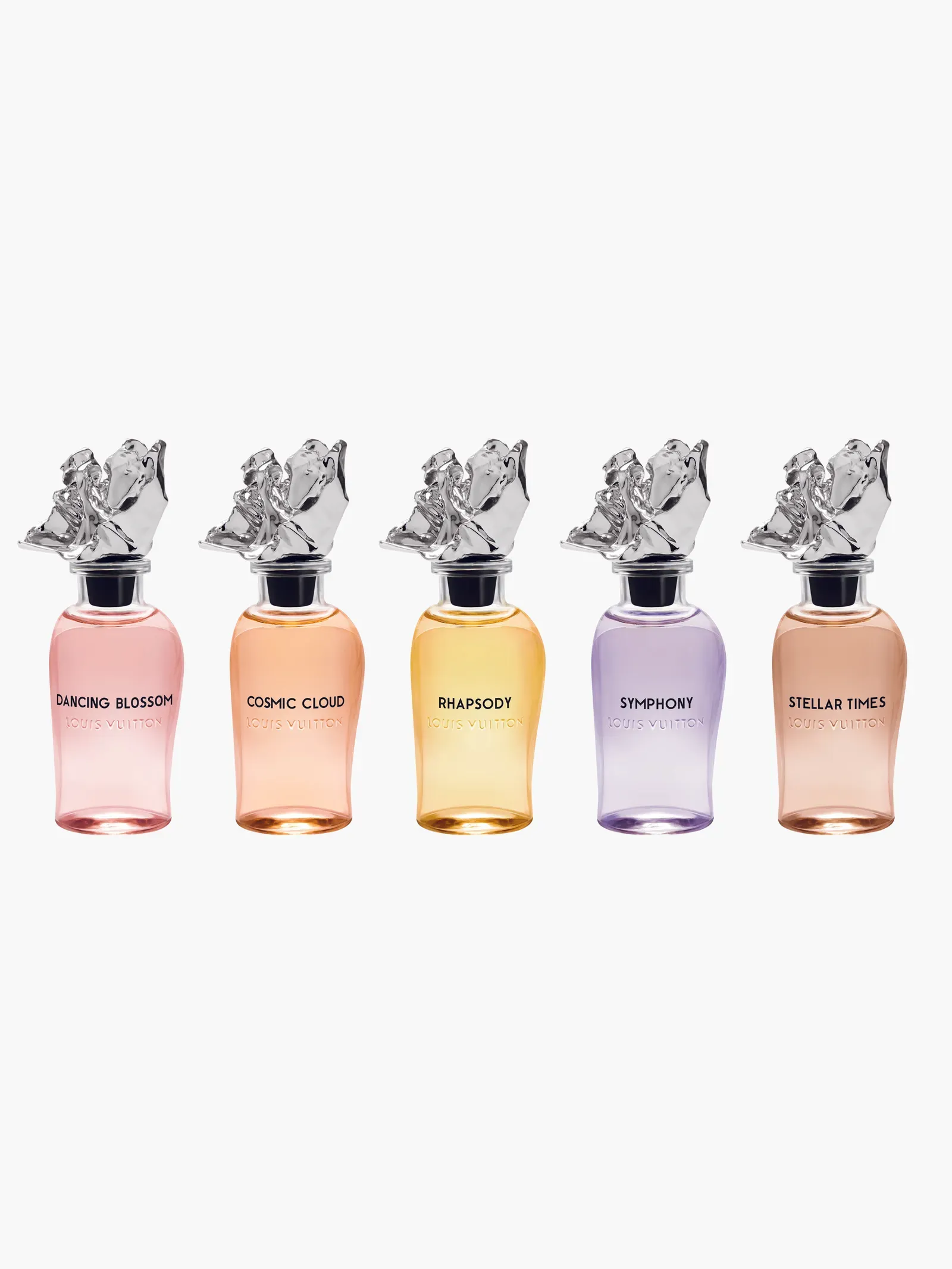
I wanted to approach the project from a sculptural point of view. To bring something different to perfume. It’s not a finished geometric form, it’s just movement. Visual movement with the added interest of ephemerality.
-Frank Gehry
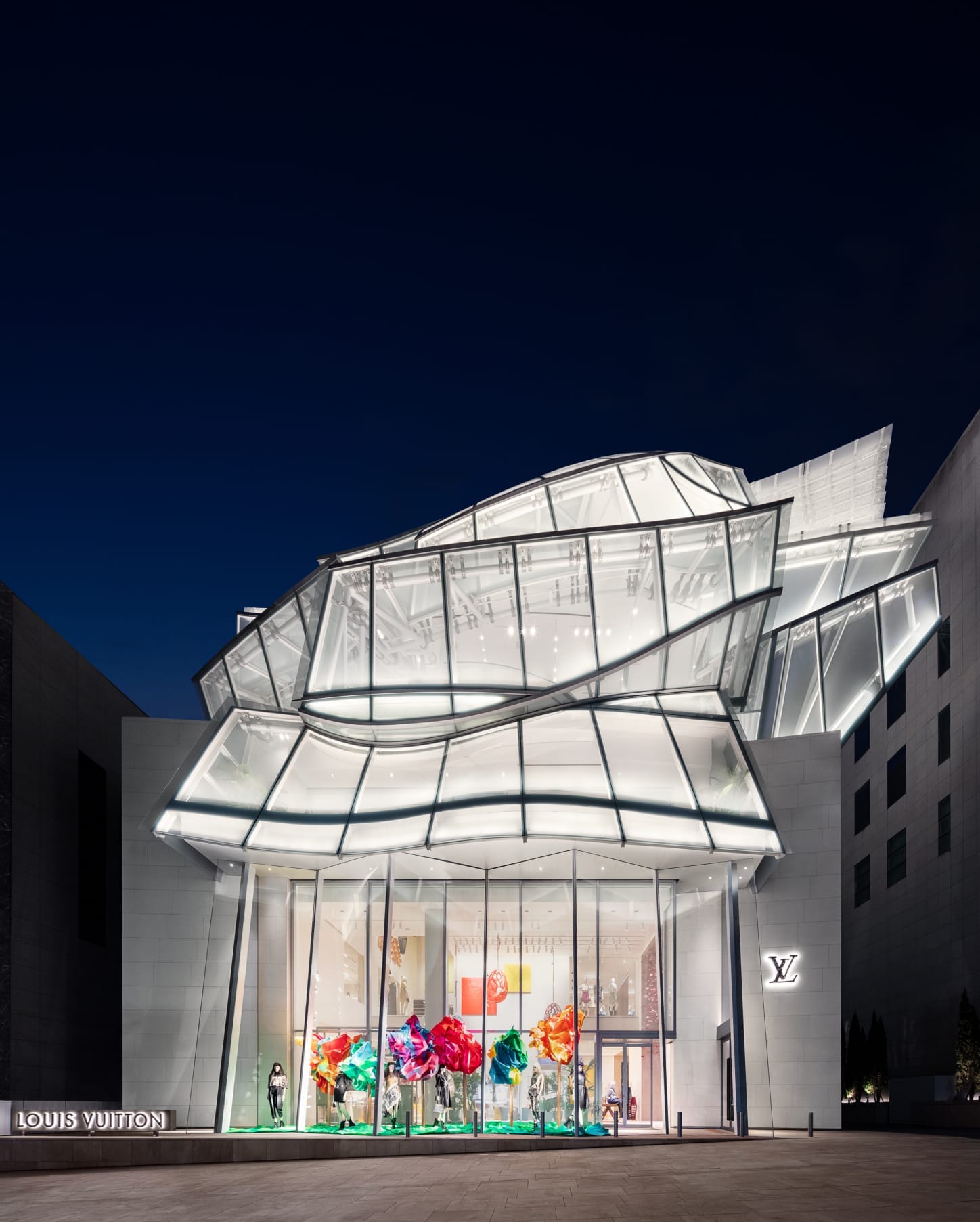
The Future Gehry-Designed Louis Vuitton Flagship on Rodeo Drive
LVMH is preparing for one of the most consequential retail investments in North America: a 100,000-square-foot, Gehry-designed Louis Vuitton flagship on the north end of Rodeo Drive.
Read the full report below:
 Robert Gutierrez Jr.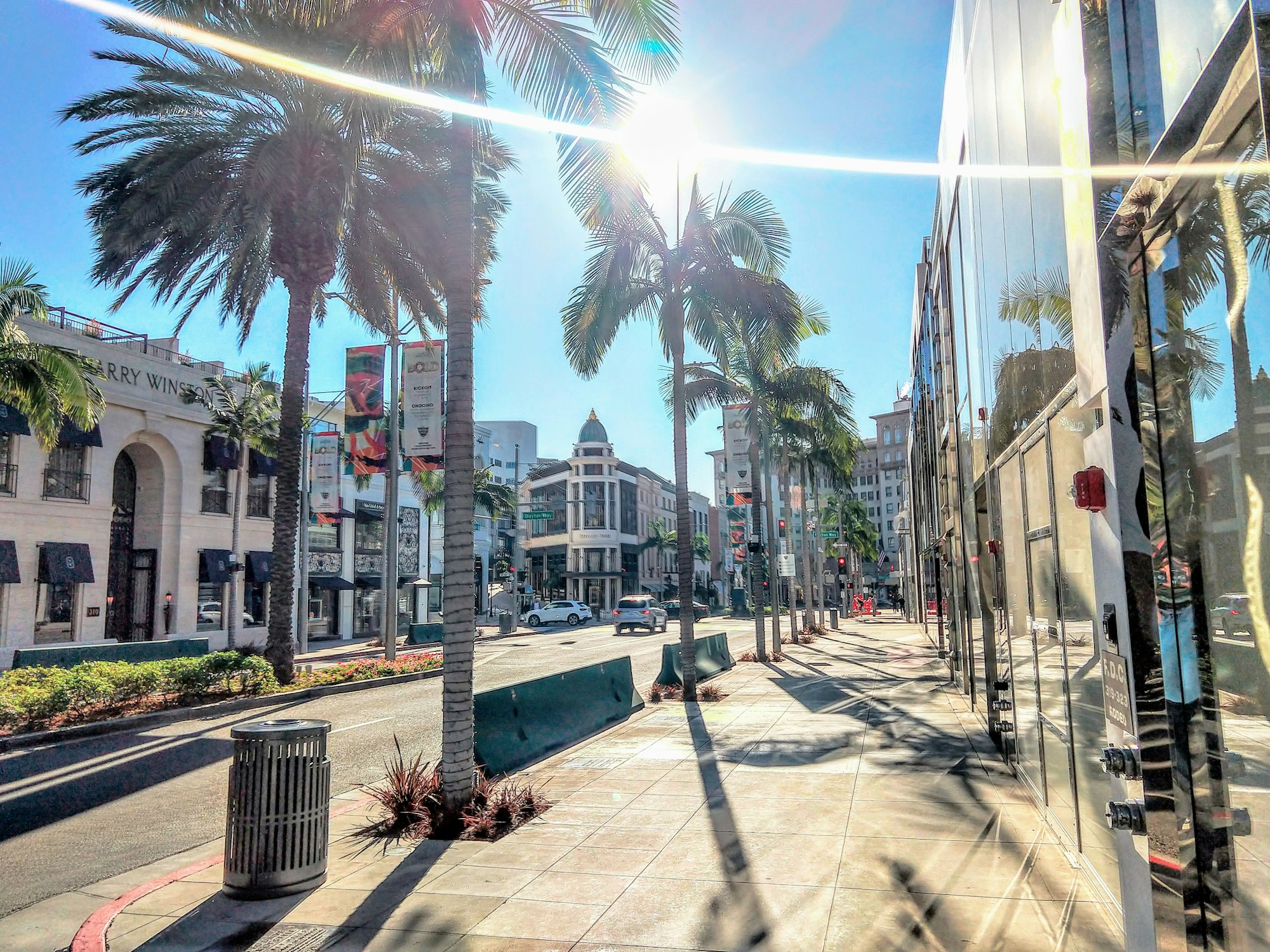
This project, approved by the Beverly Hills Planning Commission, will define the next era of the street’s architectural identity and escalate the competitive dynamics among LVMH, Richemont, and Kering.
Beyond Retail: Gehry’s Cultural Architecture & Its Influence on Luxury
Gehry’s Los Angeles projects have helped reshape the city’s cultural ecosystem—an ecosystem that luxury brands increasingly activate for exhibitions, events, and experiential strategies. His work elevates cities into cultural destinations, reinforcing the very environments where luxury thrives.
The Grand by Gehry
A large-scale mixed-use development, The Grand integrates hospitality, residential living, retail, public space, and contemporary architecture. Its spatial ambition reflects a broader shift toward cultural–urban districts, where luxury brands rely on high-footfall, aesthetically rich environments for activations and brand storytelling.
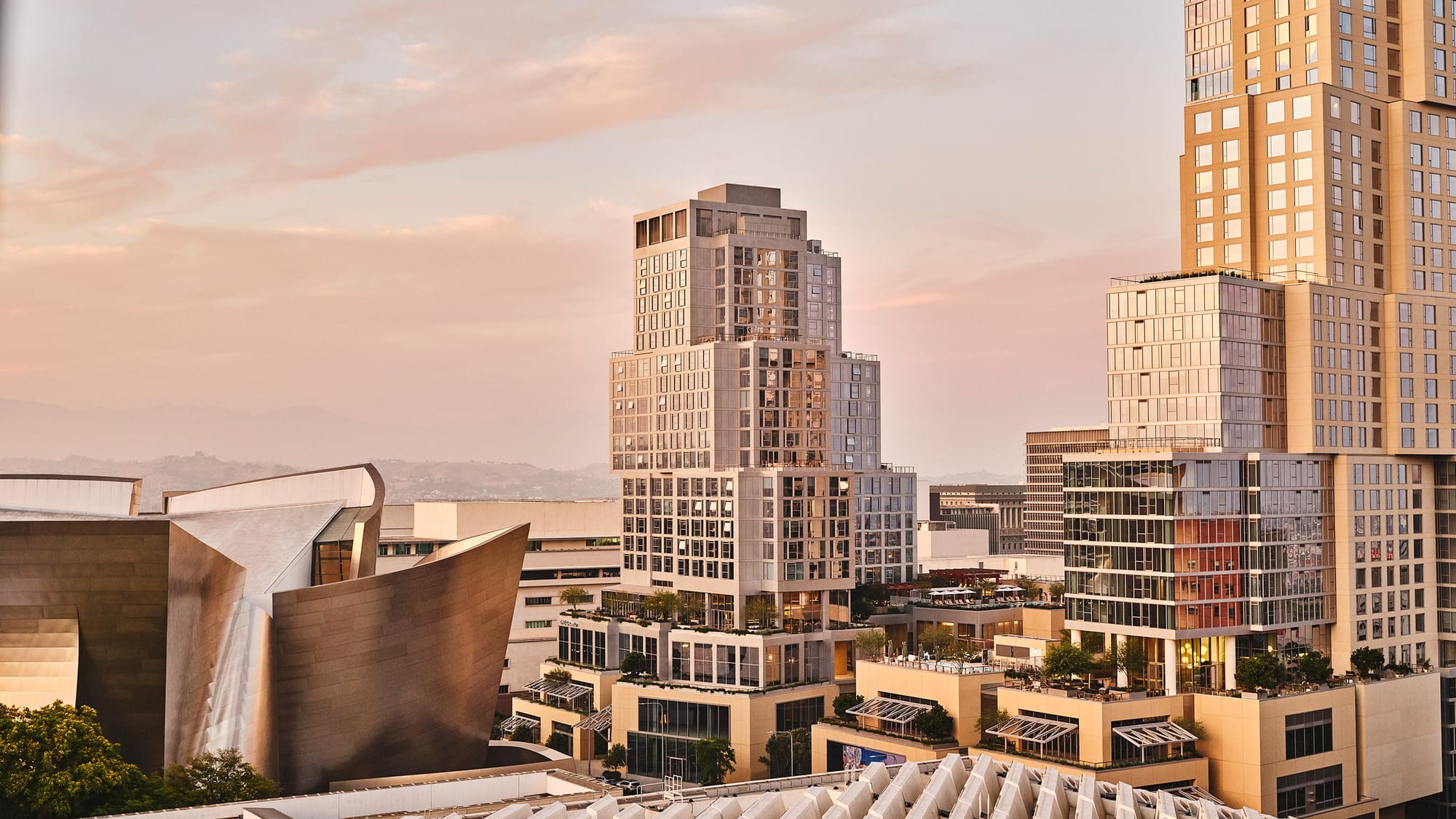
Developed by New York real estate company Related Companies, the masterplan for The Grand by Gehry was first put forward in 2006, only to be rejected by the city. The present iteration of the design was put forward and accepted in 2018.
The second tower, with 28 storeys, houses the Conrad Los Angeles hotel, which has interiors by British interior designer Tara Bernerd.
Walt Disney Concert Hall
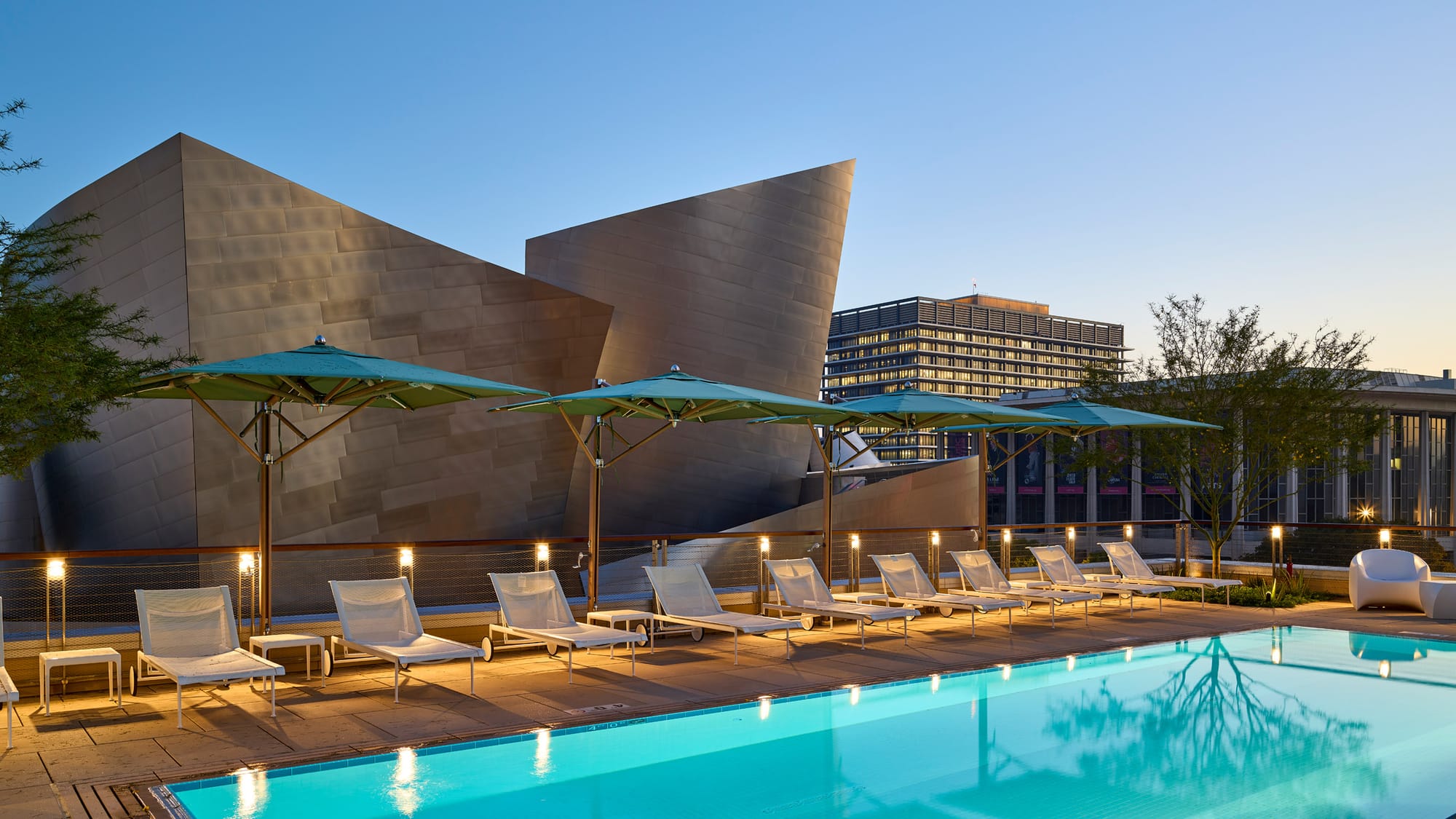
Directly facing The Grand sits one of Gehry’s most celebrated masterpieces: the Walt Disney Concert Hall, home of the LA Philharmonic. Completed in 2003 after a long and complex development journey, the Concert Hall crystallized Gehry’s reputation as a visionary of sculptural architecture.
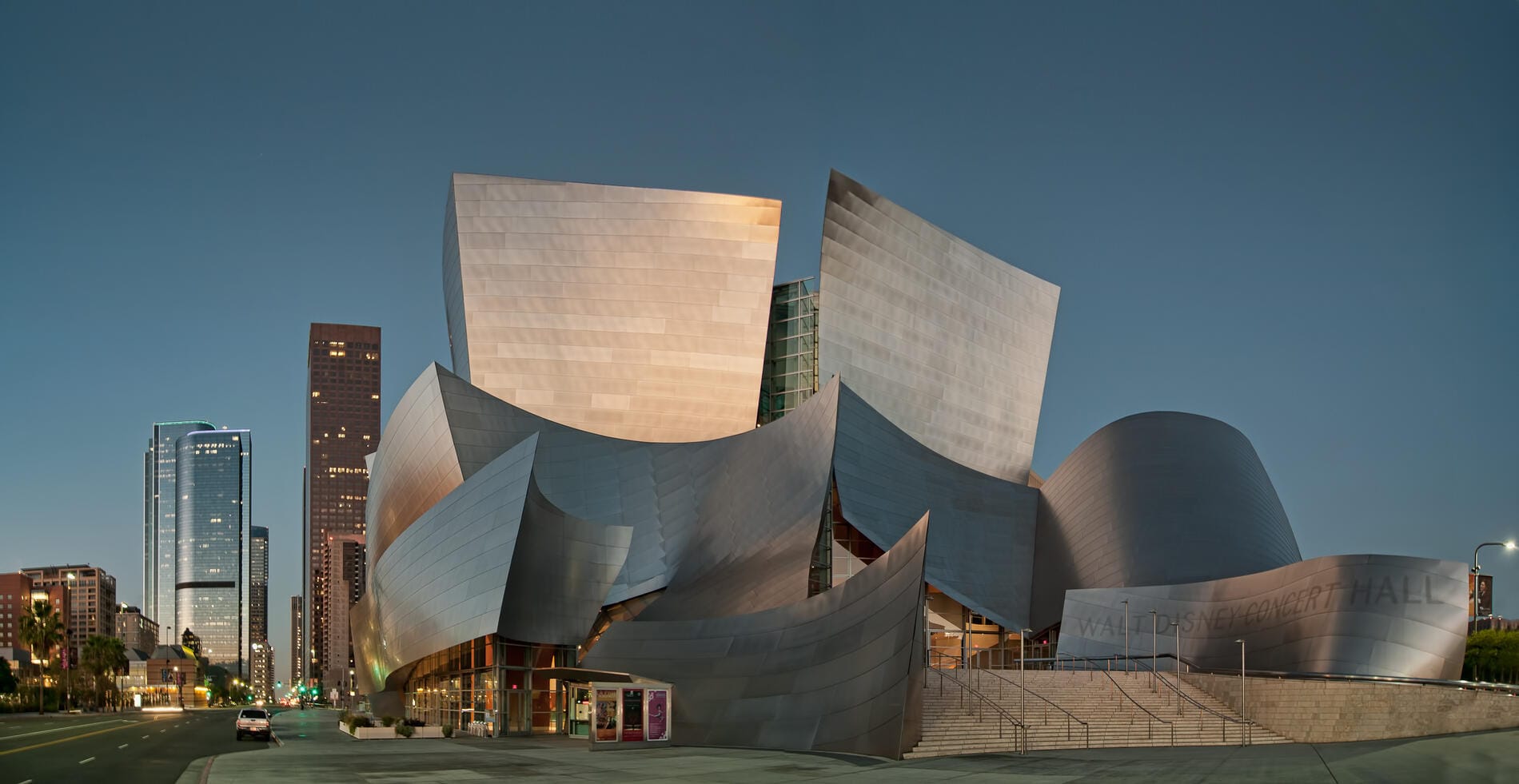
Its stainless-steel curves catch sunlight and shadow throughout the day, creating an ever-changing façade that symbolizes Los Angeles’ evolving artistic identity. Inside, the warm Douglas-fir acoustic shell wraps audiences in a space where design and performance merge seamlessly.
Together, The Grand LA and Walt Disney Concert Hall form one of the most architecturally significant intersections in the city—an urban dialogue between two Gehry works that demonstrate how cultural institutions can anchor economic energy, tourism, and luxury commerce.
A virtual tour experience.
For luxury brands, Gehry’s cultural landmarks matter because they shape the context in which luxury operates. Retail districts thrive when they sit adjacent to world-class architecture, civic investment, and cultural foot traffic. Gehry gave Los Angeles a cultural gravity that benefits every adjacent creative and commercial industry, including luxury retail.
Why Frank Gehry Matters to Luxury Retail Strategy
Gehry’s design philosophy aligns with the strategic priorities of the modern luxury Maison:
Iconicity as Strategy
In a crowded global market, Gehry buildings deliver instant landmark value. They become destinations, not just stores.
Cultural Positioning
His work blurs the line between architecture and art—aligning seamlessly with Maisons seeking to be perceived not simply as retailers but as cultural forces.
Experiential Differentiation
Gehry's designs create emotional impact. They encourage exploration, reflection, and wonder—sentiments at the heart of the luxury client experience.
Urban Influence
A Gehry project can reshape a neighborhood’s identity. For brands, this is more than design—it is market power.Modern luxury is no longer just about product—it is about place, story, and meaning. Gehry’s architecture gave physical form to that evolution.
A Legacy That Lives in Light and Movement
Frank Gehry passed away, leaving the world with structures that feel alive—buildings that bend, twist, and shimmer as if they carry their own emotional vocabulary. His work challenged us to question what a building could be. He pushed the boundaries of imagination while grounding his creations in human curiosity and delight.
For Los Angeles, his legacy is especially intimate. He helped define the architectural character of our city, from neighborhood streets in Santa Monica to monumental cultural landmarks.
For the luxury industry, he elevated retail architecture into a medium of artistic expression and cultural power, setting a new standard for how brands communicate prestige and emotion.
And for admirers like me, who discovered Gehry not first through textbooks but through a quiet neighborhood jog, his work remains a reminder that creativity is not distant. It lives among us, in our cities, our communities, and the places we call home.
Frank Gehry changed the language of architecture. His buildings will continue speaking for generations.
References: LVMH, Louis Vuitton, Dezeen, LA Phil


